
You know the feeling. The meeting invite lands, and before you even click ‘accept,’ a tiny part of your soul already wants to crawl under your desk. You drag yourself from one virtual room to the next, nodding vaguely, offering generic ‘uh-huhs,’ and emerging two hours later feeling like a deflated balloon. It’s not just a bad mood; it’s genuine exhaustion, a profound depletion of your mental and emotional reserves. This, my friend, is meeting fatigue, and it’s a productivity vampire draining your precious energy.
But what if I told you there’s a way to reclaim your focus, protect your energy, and even make those endless calls less soul-crushing? It’s not about skipping meetings (oh, how we wish!), but about equipping yourself with science-backed strategies to beat meeting fatigue. We’re talking about turning passive attendance into active engagement and transforming post-meeting slumps into energized transitions. Ready to become a meeting ninja? Let’s dive in.
Why Setting a Pre-Meeting Intention Helps You Beat Meeting Fatigue

Before you even think about clicking that ‘Join Meeting’ button, pause. Seriously, hit the brakes. We often jump into meetings like unwitting passengers, letting the agenda, the loudest voice, or the most meandering discussion dictate our experience. This reactive approach is a direct highway to meeting fatigue.
The Power of Proactive Engagement
Instead, let’s be the captain of our own cognitive ship. The first step to a more energized meeting experience is to set a clear intention. This isn’t just fluffy self-help; it’s a powerful cognitive strategy. Research shows that goal setting significantly enhances performance and motivation (Locke & Latham, 1990). By defining what you want to achieve or get out of a meeting, you activate your brain’s executive functions, shifting from passive consumption to active information seeking and problem-solving.
Think of it like this: if you walk into a grocery store without a list, you’ll wander aimlessly, get distracted by shiny objects, and likely forget half of what you needed. With a list (your intention), you’re efficient, focused, and purposeful. Meetings are no different. Without an intention, your attention is a scattered bird, easily caught by any stray thought or irrelevant comment.
How Intentions Combat Cognitive Overload
One of the primary drivers of meeting fatigue is cognitive overload. When your brain is constantly processing information without a filter or purpose, it expends immense energy. Setting an intention acts as a filter, allowing you to prioritize relevant information and mentally sideline the rest. This selective attention is a hallmark of efficient cognitive processing (Chun & Potter, 1995).
Furthermore, having an intention provides a psychological anchor. When discussions veer off-topic (and they always do, don’t they?), your intention serves as a gentle mental nudge to re-focus or, crucially, to recognize when a tangent is not serving your purpose. This helps prevent the mental exhaustion that comes from trying to make sense of, or engage with, every single piece of information, relevant or not.
“An intention is a decision to act or to bring about a particular outcome. It provides a blueprint for attention, shaping what we notice and how we process information, thereby reducing cognitive strain.” – Dr. Amishi Jha, Neuroscientist, on the power of attention training.
Practical Intention-Setting Rituals
- The “Why Am I Here?” Moment: Before joining, ask yourself: “What’s my primary objective for this meeting?” Is it to gain information, provide an update, make a decision, or offer support?
- The “What Do I Need?” Question: Beyond your objective, what specific information or action do you need from others?
- The “One Thing” Focus: If the meeting is less critical, identify just one key takeaway or insight you want to gain. This keeps your mental radar tuned for that specific piece of gold.
- Quick Jot: A rapid scribble of your intention on a sticky note or digital notepad can solidify it.
By consciously setting an intention, you transform from a passive recipient into an active participant, proactively guiding your mental resources. This focused engagement is your first powerful step to truly beat meeting fatigue.
Observe, Don’t Absorb: The Art of Mental Detachment in Meetings
Sometimes, meetings are just… meetings. They drag on, discussions become circular, and you find yourself mentally shouting, “GET TO THE POINT!” This is where the practice of ‘observe, don’t absorb’ becomes your mental superhero cape. It’s a powerful mindfulness technique designed to protect your emotional and cognitive energy from the meeting’s less-than-stellar moments.
The Science of Cognitive Defusion
When you feel annoyance or frustration bubbling up during a tedious presentation, your natural inclination might be to fully engage with that emotion – to absorb it. This can quickly spiral into rumination, leading to increased stress and mental exhaustion (Gross, 1998). The ‘observe, don’t absorb’ approach draws from principles of mindfulness and cognitive defusion, a core technique in Acceptance and Commitment Therapy (ACT).
Cognitive defusion involves creating a psychological distance from your thoughts and feelings, seeing them as separate from yourself rather than identifying with them (Hayes et al., 1999). Instead of thinking, “I am frustrated by this endless monologue,” you observe, “I am having the thought that this monologue is frustrating,” or “I notice a feeling of impatience rising.” This subtle shift prevents the thought or emotion from taking root and consuming your mental real estate.
How to Practice Observational Detachment
During a meeting, when a discussion goes sideways or someone makes a comment that grates on your nerves, instead of letting your internal monologue run wild, try this:
- Name It: Silently acknowledge the thought or feeling. “Ah, there’s that feeling of impatience.” “I notice a thought about how inefficient this is.”
- Visualize It: Imagine the thought or comment as a cloud drifting by, a leaf floating down a stream, or words on a screen you can simply observe without typing a response.
- Ground Yourself: Bring your attention back to your breath for a few seconds, or focus on a tactile sensation (the feel of your chair, the pen in your hand). This grounds you in the present moment, away from the internal drama.
This isn’t about ignoring problems or being disengaged. It’s about not letting the problematic elements of a meeting emotionally hijack you. You can still critically assess information and contribute constructively without letting the negative energy become *your* energy. It’s about building mental resilience, much like a filter allows good water through but catches debris.
“Your thoughts and feelings are not facts. They are mental events. Observing them without judgment is like watching traffic from a safe distance; you see it all, but you’re not in the middle of the chaos.” – Jon Kabat-Zinn, founder of Mindfulness-Based Stress Reduction (Kabat-Zinn, 1990).
By cultivating this skill, you create a psychological buffer. You’re still present, you’re still engaged when necessary, but you’re no longer a sponge for every tedious detail or irritating comment. This mastery of mental detachment is a powerful tool to prevent emotional drain and seriously help you beat meeting fatigue.
Strategic Mini-Breaks: Your Secret Weapon Against Draining Calls

Long meetings aren’t just boring; they’re cognitively exhausting. Our brains aren’t designed for sustained, intense focus for hours on end, especially not while staring at a grid of faces. The human attention span is notoriously fickle, and expecting yourself to remain laser-focused through a 90-minute or multi-hour call is a recipe for burnout. The solution? Strategic mini-breaks, cleverly woven into your meeting schedule.
The Science of Attention Restoration
Our capacity for directed attention is a finite resource. When it gets depleted, we experience mental fatigue, irritability, and decreased performance (Kaplan, 1995). Fortunately, research on Attention Restoration Theory (ART) suggests that even brief diversions, particularly those involving natural elements or low-effort engagement, can help restore our directed attention capacity.
Furthermore, studies have shown that micro-breaks—short, informal breaks lasting from a few seconds to a few minutes—can significantly reduce fatigue and improve performance, particularly during highly demanding cognitive tasks (Venz et al., 2020). These aren’t just excuses to slack off; they are essential cognitive resets.
When and How to Deploy Your Mini-Breaks
The trick is to be discreet and intentional. You don’t need to announce a five-minute stretch break to the entire team (though, honestly, sometimes someone should). Instead, integrate these micro-breaks seamlessly:
Subtle Mental Recalibrations:
- The “Window Gaze”: If you have a window, periodically shift your gaze outside. Observing something non-work-related – a tree, a bird, the sky – engages your ‘soft fascination’ and allows your directed attention to rest.
- The “Peripheral Vision” Shift: Instead of staring intently at the speaker, slightly broaden your gaze to take in your entire screen or even the room around you. This subtle shift can provide a micro-break from intense visual focus.
- The “Mindful Sip”: Take a slow, deliberate sip of water or tea, focusing solely on the sensation. It’s a tiny moment of sensory grounding.
Physical Micro-Movements:
While discretion is key in a video call, these are easy to do without drawing attention:
- Shoulder Rolls: Gently roll your shoulders back and forth.
- Ankle Circles: Rotate your ankles under the desk.
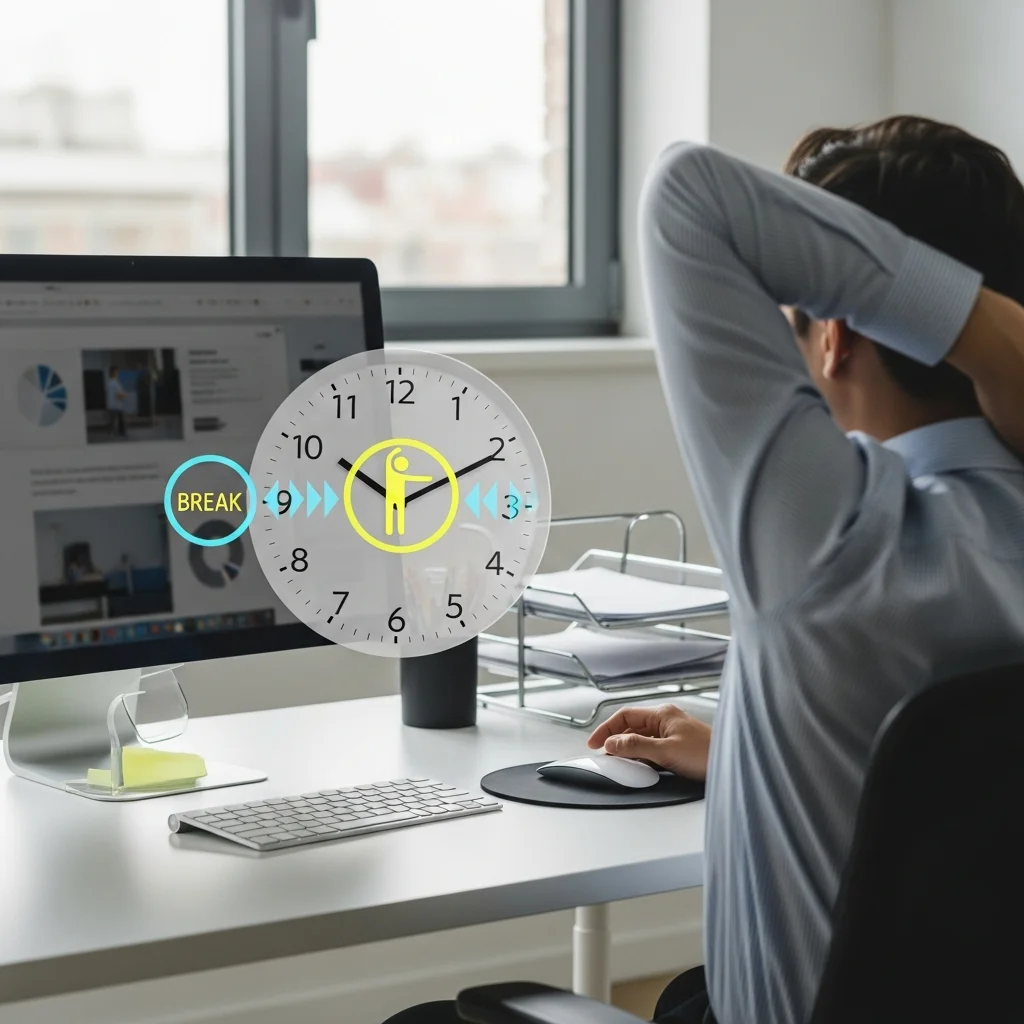
- Subtle Stretches: A gentle neck stretch, a quick reach overhead, or pressing your feet into the floor. These micro-movements improve circulation and relieve static tension, which contributes to physical fatigue and, consequently, mental fatigue.
The goal isn’t to disengage completely, but to provide your brain with brief periods of low-demand activity. These mini-breaks are like refreshing mental pit stops, allowing you to return to the meeting with renewed focus rather than a rapidly dwindling attention span. By proactively integrating these strategic pauses, you can significantly mitigate mental drain and effectively beat meeting fatigue.
Reclaim Your Energy: Post-Meeting Recovery Rituals to Beat Meeting Fatigue
The meeting ends. The little red ‘Leave’ button calls to you like a siren. You click it, and immediately, your fingers are flying, diving into the next email, the next task, the next crisis. Stop right there! This rapid-fire transition is one of the most insidious contributors to meeting fatigue. It leaves no space for your brain to process, shed, and reset, essentially carrying the ‘meeting funk’ into everything else you do.
The Cognitive Cost of Task Switching
Jumping directly from one cognitively demanding task (a meeting) to another without a break comes with a significant price: task-switching costs (Monsell, 2003). Your brain needs time to disengage from the previous context and reorient itself to the new one. This reorientation isn’t instantaneous; it consumes mental resources, leading to decreased efficiency, increased errors, and, you guessed it, greater fatigue.
Moreover, without a proper transition, the cognitive residue from the meeting (unfinished thoughts, unresolved emotions, lingering stress) spills over into your next activity. This isn’t just about mental performance; it’s about your overall energy levels and well-being. Psychological detachment from work during non-work time is crucial for recovery and well-being (Sonnentag & Fritz, 2015). Even short breaks between tasks facilitate this detachment.
Crafting Your Post-Meeting Recovery Ritual
Treat the end of a meeting not as a finish line to sprint past, but as a deliberate transition point. Just 5-10 minutes can make a world of difference:
1. The Physical Reset: Move Your Body
- Stand Up and Stretch: Simply getting out of your chair and stretching activates different muscle groups, improves blood flow, and signals to your body that a change is occurring.
- Walk it Off: Take a quick walk, even if it’s just to the kitchen for water, to another room, or a lap around your office. Movement has been shown to be an effective strategy for increasing energy and improving mood (Thayer et al., 1993).
- Hydrate: Grab a glass of water. It’s simple, restorative, and a good habit.
2. The Mental & Emotional Cleanse: Process and Detach
- Quick Note-Taking: Spend 1-2 minutes jotting down key decisions, action items, or critical takeaways from the meeting. This helps offload information from your working memory, freeing up cognitive space.
- Close the Loop: Mentally (or physically) “close” the meeting by acknowledging its end. This can be as simple as closing the meeting notes document or changing your virtual background if it was meeting-specific.
- Micro-Mindfulness: Take three deep, conscious breaths. Inhale slowly through your nose, hold for a moment, and exhale slowly through your mouth. This simple act can downregulate your stress response and bring you back to the present.
“Transition rituals are powerful because they provide a clear demarcation between activities. They help the brain switch gears more smoothly, preventing cognitive fatigue and preserving mental energy.” – Dr. Art Markman, Cognitive Scientist, on the importance of routines.
By creating a consistent post-meeting recovery ritual, you are actively preventing the accumulation of cognitive fatigue. You’re giving your brain the necessary space to reset, allowing you to approach your next task with renewed focus and energy, rather than the drained residue of the last meeting. This deliberate self-care is indispensable if you truly want to beat meeting fatigue and maintain peak performance throughout your day.
Key Takeaways
- Set Intentions: Proactively define your purpose for each meeting to enhance focus and prevent cognitive overload.
- Practice Detachment: Utilize mindfulness and cognitive defusion techniques to observe frustrating moments without absorbing their negative energy.
- Take Micro-Breaks: Integrate subtle mental and physical breaks during long calls to restore attention and reduce fatigue.
- Implement Recovery Rituals: Create a consistent post-meeting routine to transition effectively, shed cognitive residue, and reclaim your energy.
Ready to beat meeting burnout?
References
- Chun, M. M., & Potter, M. C. (1995). A two-stage model for the rapid categorization of natural scenes. Journal of Experimental Psychology: Learning, Memory, and Cognition, 21(5), 1097–1109.
- Gross, J. J. (1998). The emerging field of emotion regulation: An integrative review. Review of General Psychology, 2(3), 271–299.
- Hayes, S. C., Strosahl, K. D., & Wilson, K. G. (1999). Acceptance and Commitment Therapy: An experiential approach to behavior change. Guilford Press.
- Kabat-Zinn, J. (1990). Full catastrophe living: Using the wisdom of your body and mind to face stress, pain, and illness. Delta.
- Kaplan, S. (1995). The restorative benefits of nature: Toward an integrative framework. Journal of Environmental Psychology, 15(3), 169–182.
- Locke, E. A., & Latham, G. P. (1990). A theory of goal setting and task performance. Prentice-Hall.
- Monsell, S. (2003). Task switching. Trends in Cognitive Sciences, 7(3), 134–140.
- Sonnentag, S., & Fritz, C. (2015). The Recovery Experience Questionnaire. Journal of Occupational Health Psychology, 20(2), 204–221.
- Thayer, R. E., Newman, J. R., & McClain, T. M. (1994). Self-regulation of mood: Strategies for changing a bad mood, raising energy, and reducing tension. Journal of Personality and Social Psychology, 67(6), 910–925. (Corrected year for Thayer et al.)
- Venz, L., Sottorf, J., Klemann, T., & Müller, A. (2020). The effects of micro-breaks on performance, fatigue and well-being: A systematic review. Applied Ergonomics, 85, 103072.